
Brazil

Narratives from COP 30 Belém: Unlocking the Potential of the Global Funding Ecosystem to Invest in a Sustainable Amazon Bioeconomy through the Lens of Local Communities

Narratives from COP 30 Belém: Unlocking the Potential of the Global Funding Ecosystem to Invest in a Sustainable Amazon Bioeconomy through the Lens of Local Communities

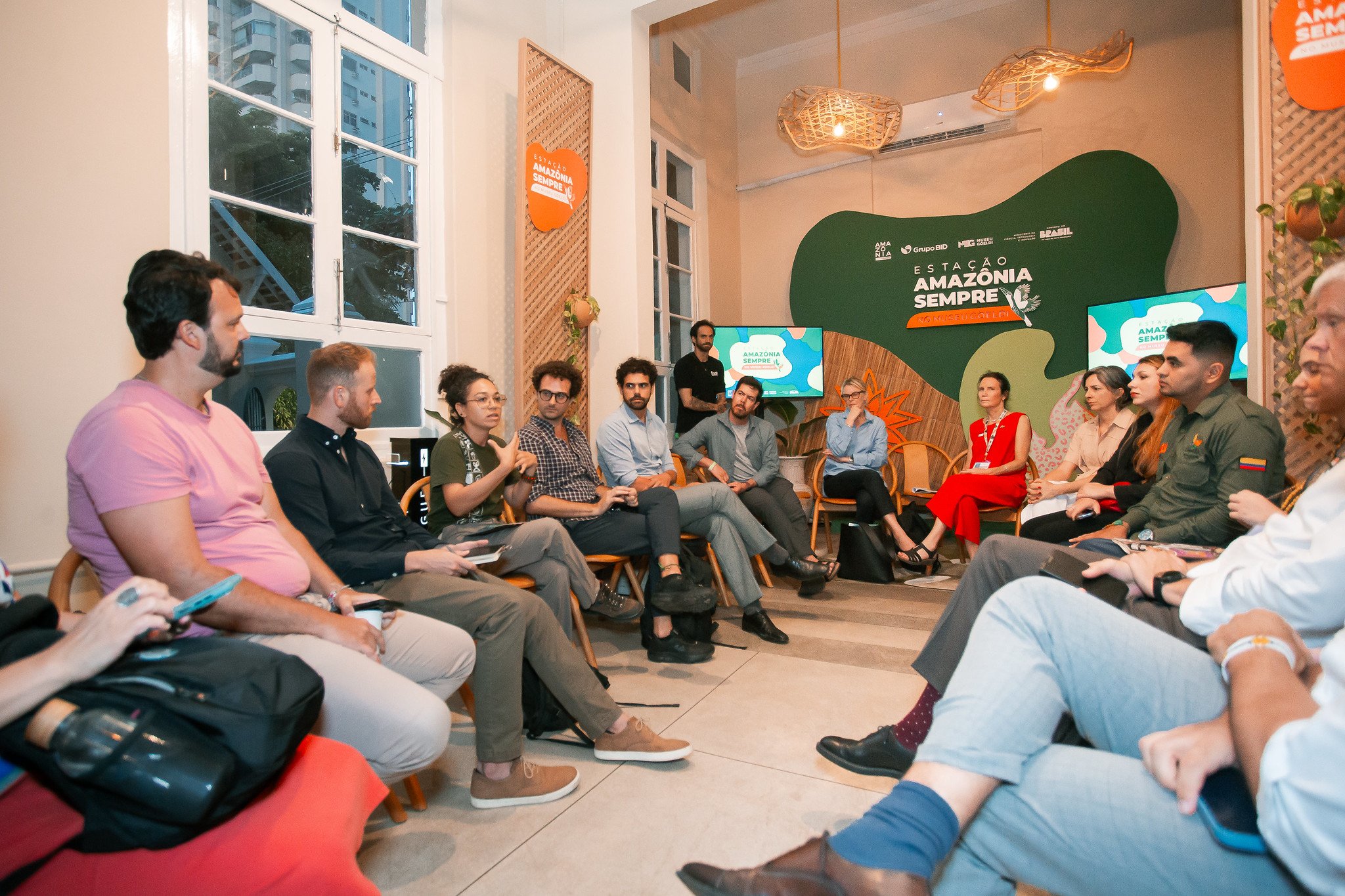
This video brings together testimonies from leaders in the sociobioeconomy who have participated in key climate and finance forums, such as COP30 in Belém, with support from NESsT. Grounded in lived experience, these leaders’ perspectives highlight why their presence is essential in spaces where far-reaching decisions are made.
Why Financing for the Amazon Matters to Everyone: A conversation with NESsT's Cairo Bastos, Program Manager in Brazil

Why Financing for the Amazon Matters to Everyone: A conversation with NESsT's Cairo Bastos, Program Manager in Brazil

COP30, held in Brazil and hosted in the Amazon for the first time, marked a turning point in global discussions on climate and development. Against this backdrop, NESsT has been working more intentionally to bring local realities from the Amazon into global debates around access to financing. We spoke with Cairo Bastos, Program Manager at NESsT Brazil, about his key takeaways from Belém, what it takes in practice to build development models rooted in local territories, and why financing for the Amazon is a topic that concerns taxpayers and citizens more broadly.

From Territories to Global Decisions: Communities at the Forefront of the Socio-Bioeconomy

From Territories to Global Decisions: Communities at the Forefront of the Socio-Bioeconomy

Indigenous Peoples remain largely underrepresented in global decision-making spaces — revealing a contradiction between their leading role in protecting nature and their absence from the forums where environmental and economic policies are defined. This exclusion is no coincidence: it reflects historical, linguistic, financial, and political barriers that limit the access of those who live in and protect the territories to the tables where the future of biodiversity and the economy is decided.

Heading to COP30: Strengthening the Voices and Solutions of Amazonian Territories

Heading to COP30: Strengthening the Voices and Solutions of Amazonian Territories

Beginning next week, NESsT will participate in COP30 Brazil, in Belém, Pará — a historic conference that will place the Amazon at the center of global climate discussions and mark the largest Indigenous presence ever recorded in UN negotiations. We will be there alongside entrepreneurs from our Amazon portfolio, bringing experiences born in the territories and showing that the most effective climate solutions come from those who live in and protect the forest.

Financing the Future of the Amazon: How to Unlock the Potential of the Socio-bioeconomy with Credit and Public Policies

Financing the Future of the Amazon: How to Unlock the Potential of the Socio-bioeconomy with Credit and Public Policies

Today, only a small share of the credit offered by financial institutions reaches those who protect the forest. If governments and multilateral organizations work together to change this, sustainable businesses can thrive — and so can the Amazon. 

When Entrepreneurship Becomes Resistance: How Financial Inclusion Strengthens Lives and Communities

When Entrepreneurship Becomes Resistance:  How Financial Inclusion Strengthens Lives and Communities

In Brazil, millions of Black people become entrepreneurs not out of choice, but out of necessity. In doing so, they transform their communities, generate income, and open doors for others. In a context of structural gender inequality, the challenges are even greater for women, who face multiple barriers throughout their entrepreneurial journeys. This July, as we mark Latin American Black and Caribbean Women’s Month, NESsT reaffirms its commitment to racial equity and to strengthening businesses in Brazil that are building a more just future.

NESsT Announces Partnership with Sweden to Transform South America’s Green Value Chain

NESsT Announces Partnership with Sweden to Transform South America’s Green Value Chain

Sweden joins as a donor to NESsT’s long-standing South America acceleration program, enabling the program to increase the number of enterprises it supports and to expand its efforts in Colombia, Peru, and into Brazil.

Technology Meets Traditional Knowledge in the Amazon’s Socio-Bioeconomy

Technology Meets Traditional Knowledge in the Amazon’s Socio-Bioeconomy

Many community-based enterprises in emerging sustainable socio-bioeconomy value chains lack the means and infrastructure to adopt digital monitoring and communication tools to track forest conservation and improve their production processes. With support from Cisco Foundation, in 2021, NESsT launched a search for early-stage technology enterprises that provide sustainable livelihoods to underserved communities and regenerate the environment. Read more about the initiative learnings here.

Women’s Month Feature: NESsT portfolio entrepreneurs who are leading social change through business in South America and Central and Eastern Europe

Women’s Month Feature: NESsT portfolio entrepreneurs who are leading social change through business in South America and Central and Eastern Europe

In celebration of Women’s History Month, we are spotlighting the stories of three women entrepreneurs at the helm of enterprises in the NESsT portfolio in Central & Eastern Europe and South America.

How Streamlining Funding Application and Reporting Criteria can Improve Financing Accessibility for Grassroots Initiatives in the Amazon

How Streamlining Funding Application and Reporting Criteria can Improve Financing Accessibility for Grassroots Initiatives in the Amazon

In this blog, we speak with bioeconomy entrepreneurs to better understand the challenges they face when applying for funding from multiple sources. Read it now to learn how complex application criteria and reporting demands impact their businesses and explore actionable recommendations for how the funding community can help ensure more equitable, inclusive access to financing.